

Gastech 2026 convenes during historic crisis
Global gas and LNG executives are gathering for their annual industry event. With gas markets in turmoil, here are some of the key issues to watch.
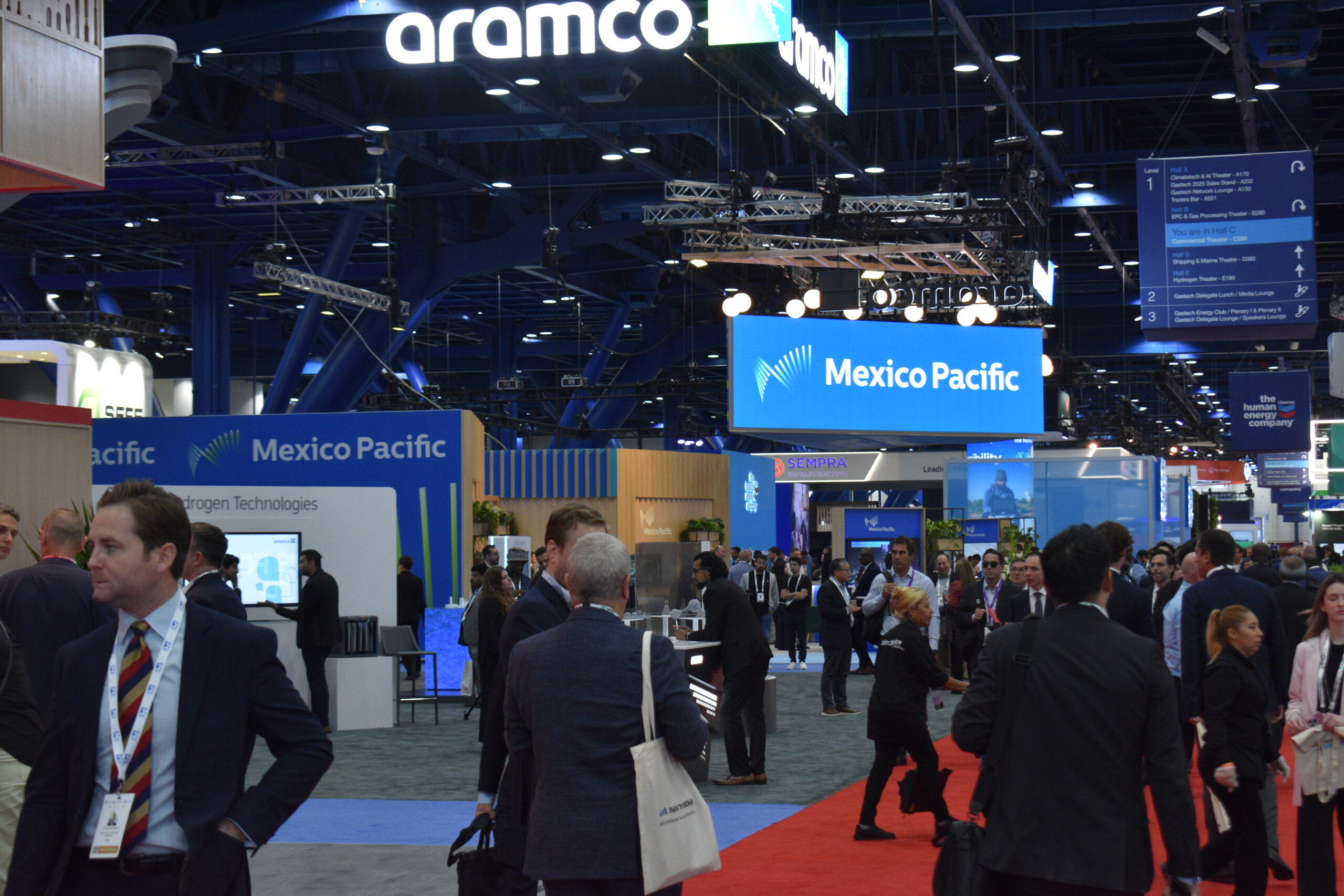
The largest gas industry conference of the year is set to kick off in Bangkok, Thailand under the shadow of disruptions in the Middle East that continue to cause gyrations in global gas prices. Gastech 2026 will run from September 14-17, and Gas Outlook will be watching closely to see what themes and trends emerge from the conference.
As executives gather for a week of networking, dealmaking and presentations, the war in the Middle East and the disruptions through the Strait of Hormuz will undoubtedly dominate many discussions. Not only are shipments of LNG through the Strait of Hormuz severely constrained, but the spike in violence in the last few weeks threatens to further choke off the trickle of oil and gas that continues to flow through the waterway.
LNG prices have been volatile in recent months, but price increases are suddenly kicking into a higher gear. Just days before Gastech begins, TTF prices have shot above $28 per MMBtu and JKM neared $25. Both benchmarks are breaking seasonal multi-year highs almost on a daily basis and are showing no signs of slowing down.
The gas industry is not a monolith, and the current market chaos creates winners and losers – a discrepancy that will likely be on full display at Gastech.
For LNG importers and gas utilities, as well as for gas producers trapped on the wrong side of the Strait of Hormuz, the current situation represents a profound crisis. Import bills are sky-rocketing, straining public coffers and imposing hardship on millions of people around the world.
LNG is not an affordable solution in most applications at the moment. In countries like Pakistan and Bangladesh, physical lack of supply means power outages are a real threat.
The situation is vastly different for LNG exporters and gas producers outside of the Middle East. The energy crisis creates a historic opportunity for record profits and secure new investment. The arbitrage from moving cheap sub-$3 Henry Hub gas in the U.S. to Europe or Asia, where prices are eight or nine times higher, is massive.
One of the major themes at Gastech will surely be the surge in interest in new LNG projects outside of the Middle East. Projects in Canada, the U.S., Mexico, Argentina, and Mozambique, among other places, have suddenly taken on renewed momentum in the wake of the Hormuz crisis. Developers will be keen to convince investors that more money is needed to build new LNG supply.
The current supply disruption “seems to have given a boost to some of the international projects outside of the U.S. In Argentina, in Canada, you’re seeing progress on a couple [of projects],” Jason Feer, head of business intelligence at Poten & Partners, a Houston-based LNG brokerage and consultancy, said on a September 9th webinar.
On the other hand, some of the higher-cost greenfield projects face an uphill climb, especially in light of the enormous expansion of LNG on the U.S. Gulf Coast.
“Future supply is crowded out by a lot of proposed projects that are brownfield add-ons, like expansions of existing projects…like Corpus Christi Stage 4, Sabine Pass Stage 5, Calcasieu Pass bolt-on, the Plaquemines bolt-ons,” said Sergio Chapa, an LNG analyst at Poten, referring to the large expansion projects occurring at existing liquefaction facilities. “So you see Sempra, Cheniere, Venture Global all going forward with these big expansion projects in places they’re already producing.”
Demand destruction
The demand side of the equation is another matter. The second major gas crisis in four years has already led to demand destruction, some of which will likely be permanent. China’s LNG imports are down this year, once again disappointing industry forecasters who for several years have predicted growth. India needs LNG for fertiliser production, but it is not planning to focus on it for power.
Meanwhile, in Southeast Asia, the picture is also murky. Economic growth and declining domestic gas production have led to industry expectations of a strong and growing need for LNG in some countries. But renewables have also increased rapidly as of late.
Importantly, there is increasingly a recognition that LNG has become pricey and unreliable. Thailand – the host of Gastech 2026 – announced in late August plans for a long-term shift to renewable energy and less dependence on LNG. The policies will vary, but other countries in the region are likely to follow suit in some form.
At Gastech, analysts will be looking to see how the industry responds to the volatility in their markets and if executives cling to business-as-usual scenarios for long-term demand growth.
Whether the industry and analysts stick to the baseline expectation that market tightness is likely to be temporary is another key theme to watch at Gastech. Prior to the war, there was a growing consensus that a significant LNG glut was set to arrive. That glut has been wiped out by the outages in Qatar, at least for the time being.
Among the big questions looming over the proceedings at Gastech is whether Qatari production will return soon. In the coming months? In 2027 or even later?
In a sign that Qatari insiders believe the disruptions could persist for months or even years, Qatar is in discussions to buy LNG from U.S. suppliers. That could boost QatarEnergy’s ability to fulfill its contracts to customers. No longer able to export from its Ras Laffan facility at home, Qatar may increasingly turn to trading LNG to deliver gas volumes to buyers in Asia. But it is a clear sign that QatarEnergy lacks confidence in its ability to restore its own capacity.
If Qatari production does come back, the LNG glut may hit with full force in the coming years. The race for a tranche of proposed LNG projects to reach final investment decision (FID) and get off the ground before the market softens will be a key point to watch at Gastech and in the coming months.
Meanwhile, there are also more immediate questions that will receive attention at the conference.
Europe is approaching winter with gas storage levels at multi-year lows. That has occurred alongside, not coincidentally, a dramatic run up in electricity prices.
Much has been made about European complacency ahead of peak winter demand season, but the LNG market has also worked against EU efforts.
Not only have prices been high in general, but Asian prices (JKM) had been pricier for long stretches of 2026 (until recently), making it difficult for Europe to attract LNG cargoes. Meanwhile, the term structure has also not helped matters. TTF futures have been in a state of “backwardation” for much of the year – a situation where immediate or front-month LNG contracts are more expensive than futures several months away. This disincentivizes energy companies from stockpiling gas for storage.
“We have not seen a very strong demand response from Europe. Europe has been the region that has really sort of capitulated in a lot of ways to these higher prices we’ve seen,” Feer said.
Europe is under time pressure to store up on gas. However, the one thing working in the region’s favour is that gas demand is down nearly 20 percent compared to pre-2022 levels, so Europe can likely skate by with lower gas in storage. In the longer-term, European efforts at electrification will be critical to staving off a future energy crunch, but the coming winter will be a costly one.
“[I]n the absence of an improvement in LNG exports through the Strait of Hormuz (SoH), European gas prices (TTF) would need to rise to discourage Asia LNG demand, thereby freeing incremental cargoes to be sent to Europe to help manage European gas storage levels,” Goldman Sachs analysts wrote in a note to clients on September 10th. “The TTF rally since July from the mid-40 EURs/MWh to over 80 EUR/MWh has been an effective driver of LNG demand destruction thus far.”
The long-term picture is a different story. The investment bank warned of “persistent oversupply.” LNG prices may be skyrocketing today, trading above $25/MMBtu, but Goldman Sachs analysts expect that in 2028 TTF and JKM will fall below $7/MMBtu and $8/MMBtu, respectively. At those levels, many of the proposed LNG projects on offer today may not make economic sense – a scenario many people at Gastech will want to avoid.